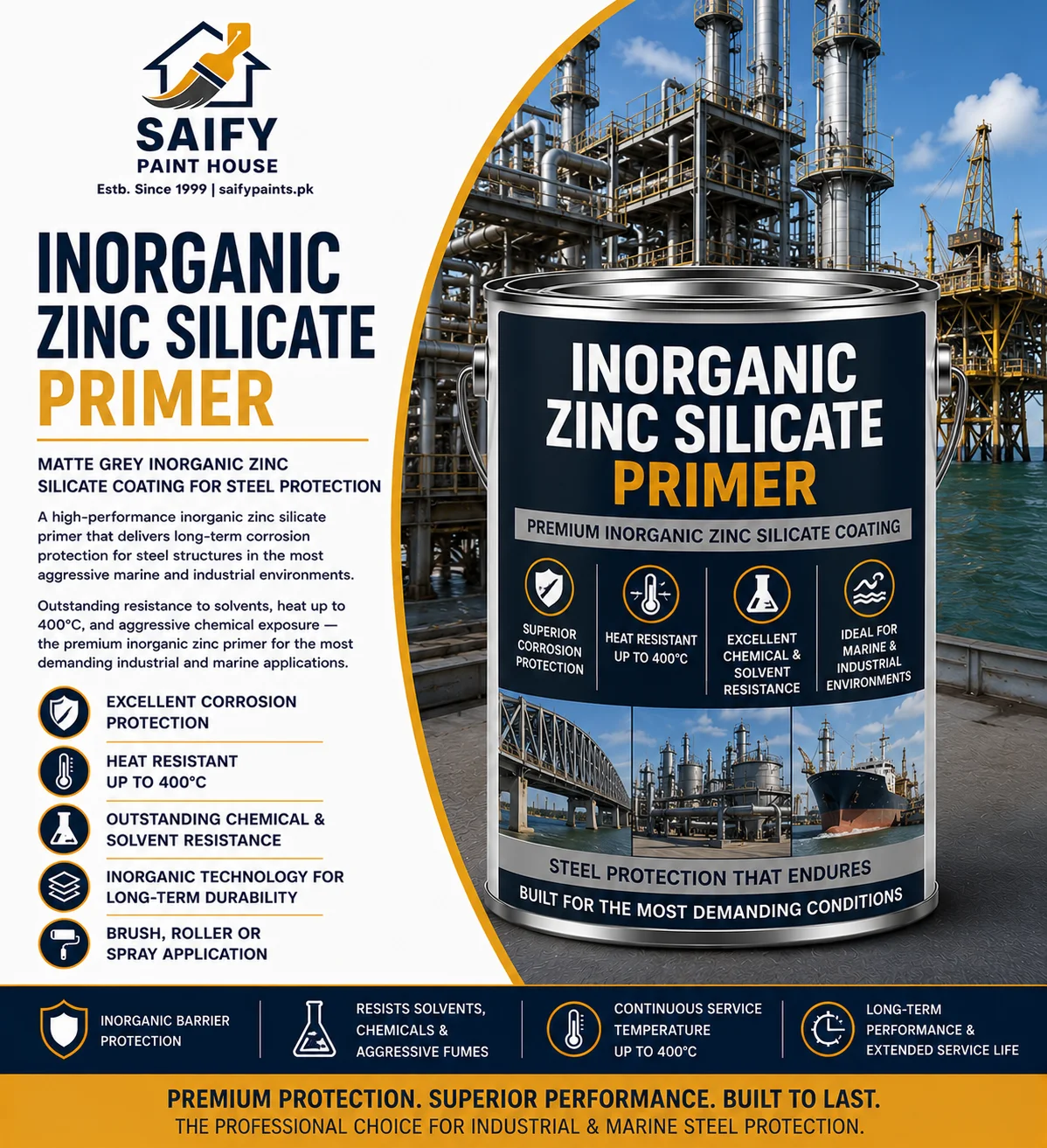
Inorganic Zinc Silicate Primer — Premium Zinc Protection for Marine & Industrial Steel
Inorganic Zinc Silicate Primer is a matte grey, high-zinc inorganic coating specifically engineered for steel protection in the most demanding marine and industrial environments. Curing through a chemical reaction with atmospheric moisture to form a hard, inorganic zinc silicate matrix, this primer delivers outstanding resistance to solvents, temperatures up to 400°C, and aggressive chemical atmospheres that would rapidly degrade conventional organic zinc-rich primers — making it the premium specification for critical steel infrastructure in Karachi’s petrochemical, offshore, and marine sectors.
Why Choose Inorganic Zinc Silicate Primer?
Inorganic Zinc Silicate Primer represents the highest performance tier of zinc-rich corrosion protection available. Unlike epoxy zinc-rich primers with organic binders, the inorganic silicate binder in this product is chemically bonded to both the zinc pigment and the steel substrate — creating a primer film with exceptional hardness, abrasion resistance, and chemical stability that organic binders simply cannot achieve. For engineers specifying corrosion protection for critical steel in petrochemical plants, offshore platforms, refineries, and marine environments in Karachi, Inorganic Zinc Silicate Primer is the definitive performance specification.
Key Features
- Inorganic zinc silicate binder — highest performance zinc primer tier
- High zinc content for maximum cathodic corrosion protection
- Outstanding solvent resistance — suitable for solvent-splash zones
- Heat resistance up to 400°C — suitable for high-temperature steel
- Superior chemical resistance in aggressive industrial atmospheres
- Exceptional hardness and abrasion resistance
- Matte grey finish — compatible with standard topcoat systems
- Mandatory specification for petrochemical and offshore steel in Karachi
Recommended Applications
Inorganic Zinc Silicate Primer is the mandatory specification for structural steel in petrochemical plants, oil refineries, offshore platforms, chemical processing facilities, power generation plants, and marine structures in the most aggressive industrial and coastal environments across Karachi. It is particularly specified for steel surfaces exposed to solvent splash, elevated temperatures, aggressive chemical atmospheres, or where the highest possible corrosion protection performance is required by project specification or international coating standards.
Surface Preparation & Application
Inorganic Zinc Silicate Primer requires blast cleaning to Sa 2.5 (near-white blast cleaning) or Sa 3 (white metal blast cleaning) standard — the inorganic binder requires a clean, high-profile blast-cleaned surface to develop its maximum adhesion and cathodic protection performance. Apply by airless spray to achieve the specified dry film thickness in a single coat. Allow full atmospheric moisture cure before overcoating — typically 8 to 24 hours depending on temperature and humidity conditions. Apply compatible epoxy or polyurethane intermediate and topcoat systems after full cure per the product data sheet.
Industries That Rely on Inorganic Zinc Silicate Primer
Inorganic Zinc Silicate Primer is the standard specification across petrochemical, oil and gas, offshore, refinery, power generation, chemical processing, and marine sectors in Pakistan where the highest corrosion protection performance in aggressive chemical, solvent, and thermal environments is a non-negotiable project requirement. It is regularly specified by corrosion engineers and coating inspectors on major industrial and infrastructure projects in Karachi meeting international coating standards such as NACE, ISO 12944, and SSPC specifications.
Buy Inorganic Zinc Silicate Primer in Karachi
Available at Saify Paint House — your trusted industrial coatings dealer in Karachi DHA since 1999. We stock the complete range of zinc rich primers in Karachi for immediate availability. Visit us at Shop #2, Plot 31E, Badar Commercial, DHA Phase 5, or contact us below.